

Basic CRO Guide: Optimizing Websites to Generate More Leads
Have you ever wondered how to make your website generate more sales and conversions? If your online business struggles to attract customers and convert leads, the answer may lie in Conversion Rate Optimization (CRO). This powerful strategy can transform your website, boosting your results in a surprising way!
In this article, we will dive deep into the world of CRO and discover how it can drive your business growth. From basic concepts to the most advanced techniques, you’ll have access to everything you need to know to start improving the efficiency of your online sales funnel.
What Is CRO and Why Is It So Important?
CRO, or Conversion Rate Optimization, is the process of continuously improving a website or application to maximize the number of visitors who become customers or qualified leads. It’s a strategic approach that goes far beyond simply generating more traffic. After all, what’s the point of having thousands of visits if only a small fraction of them converts into tangible results for your business?

CRO is essential because it allows you to extract the maximum potential from your website, turning simple visitors into real customers. By optimizing the user journey and removing barriers that prevent conversions, you can boost key metrics such as conversion rate, leads generated, and sales.
Companies that adopt a structured CRO approach see impressive results. According to the Landingi platform, companies that use CRO optimization tools on landing pages see an average 30% increase in conversions. In other words, small improvements to the site can generate a significant impact on your results, without the need to invest heavily in attracting more traffic.
The Essential Steps of Conversion Rate Optimization
The conversion rate optimization journey consists of several crucial steps. Let’s explore them in detail:
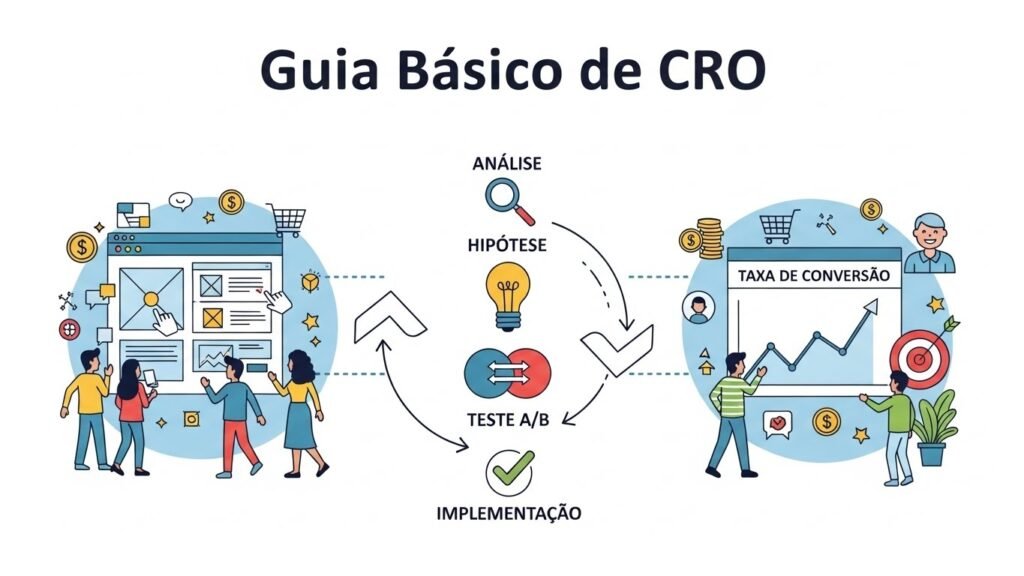
1. Current Website Analysis
The first step of CRO is to perform an in-depth analysis of your website and its current performance. You need to identify the main problems and bottlenecks that are preventing visitors from converting into leads or customers. Some important metrics to analyze include:
- Bounce rate
- Average time on site
- Conversion rates at different funnel stages
- User behavior throughout the navigation journey
This critical analysis will help you understand exactly where the friction points are and what improvements need to be implemented.
2. Creating Optimization Hypotheses
Based on the insights gained from the analysis, you can begin developing hypotheses about possible changes that could positively impact the conversion rate. These hypotheses can range from design and layout adjustments to modifications in content and calls to action.
It’s important to establish clear objectives for each optimization test, such as increasing form completions, reducing cart abandonment rate, or boosting the number of leads generated. This will help you measure the impact of the changes.
3. A/B and Multivariate Testing
After defining your hypotheses, the next step is to plan and execute A/B and multivariate tests. These tests allow you to compare different variations of your website and determine which one produces better results.
By testing key elements such as headlines, images, buttons, and navigation flows, you can identify which versions are most effective at converting visitors. According to the Landingi platform, conversion rate optimization with tools can increase conversions by up to 223%. Therefore, A/B tests are essential for maximizing your site’s conversion potential.
4. Analysis and Iteration
After running the tests, it’s time to carefully analyze the results. Which variations generated more conversions? Which metrics improved significantly? Based on these insights, you can implement the best practices identified and continue refining your site iteratively.
The analysis of test results should consider not only conversion rates but also complementary metrics such as bounce rate, average time on site, and form completion rate. This holistic view will help you understand the impact of optimizations across the entire user journey.
As you conduct new rounds of testing and implement improvements, it’s crucial to maintain a continuous cycle of analysis and iteration. This incremental approach allows you to constantly improve your site’s efficiency, ensuring it always aligns with your customers’ needs and expectations.
Key Elements to Optimize for Higher Conversion Rates
Now that you understand the fundamental steps of CRO, let’s explore some of the key elements you can optimize to boost your conversion rates:
Website Design and Usability
Your website’s design and usability play a crucial role in the user experience and, consequently, in your ability to convert visitors into customers. Some aspects to consider:
- Layout and structure: Organize content and key elements in a logical and intuitive way, guiding the user through a smooth navigation journey.
- Colors and typography: Choose a color palette and typography that convey your desired brand image and make reading easy.
- Responsiveness: Make sure your site is optimized for mobile devices, as the average e-commerce conversion rate ranges between 2.5% and 3%, but simple adjustments to copy, layout, or elements can significantly boost it.
Content and Calls to Action
Your website’s content is fundamental for engaging and converting your visitors. Pay attention to these aspects:
- Content relevance and clarity: Make sure the content addresses your target audience’s main pain points and needs in a clear and concise way.
- Structure and language: Organize the content logically and use accessible, persuasive language.
- Calls to action (CTA): Position your calls to action strategically, with persuasive copy that encourages the user to take the next desired action.
Forms and Checkout
The form filling and checkout process is a crucial point in the user journey. Here are some important tips:
- Simplification: Reduce the number of form fields and simplify the checkout process by eliminating unnecessary steps.
- Friction reduction: Remove any barriers that might intimidate or discourage the user during the conversion process.
- Feedback and confirmation: Provide clear feedback and visual confirmations during the process, reassuring the user and reinforcing the completion of the action.
CRO Best Practices and Tips
Beyond the key steps and elements, there are some important best practices and tips for a successful CRO strategy:
- Focus on understanding the user: Put yourself in your target audience’s shoes and seek to deeply understand their motivations, pain points, and purchasing journey.
- Test continuously and iteratively: Never stop testing and improving your site. Maintain a constant cycle of analysis, optimization, and retesting.
- Measure and analyze results carefully: Carefully monitor key metrics and use insights to inform your decisions.
- Apply improvements gradually and with planning: Make changes in a structured way and plan the impact of each change, avoiding abrupt modifications.
Conclusion
Conversion Rate Optimization (CRO) is a powerful strategy that can transform your website’s performance and boost your online business results. By understanding the essential steps, identifying the key elements to optimize, and applying best practices, you can generate a significant increase in qualified leads and actual sales.
So don’t let your website fall short of its potential. Start implementing conversion rate optimization actions and closely monitor the results. Remember: small improvements can make a big difference!
Want your business to generate sales and traffic? Contact Us and take your business to the next level!
To deepen your knowledge, also check out: