

How to Structure Layouts That Increase Conversion and Usability
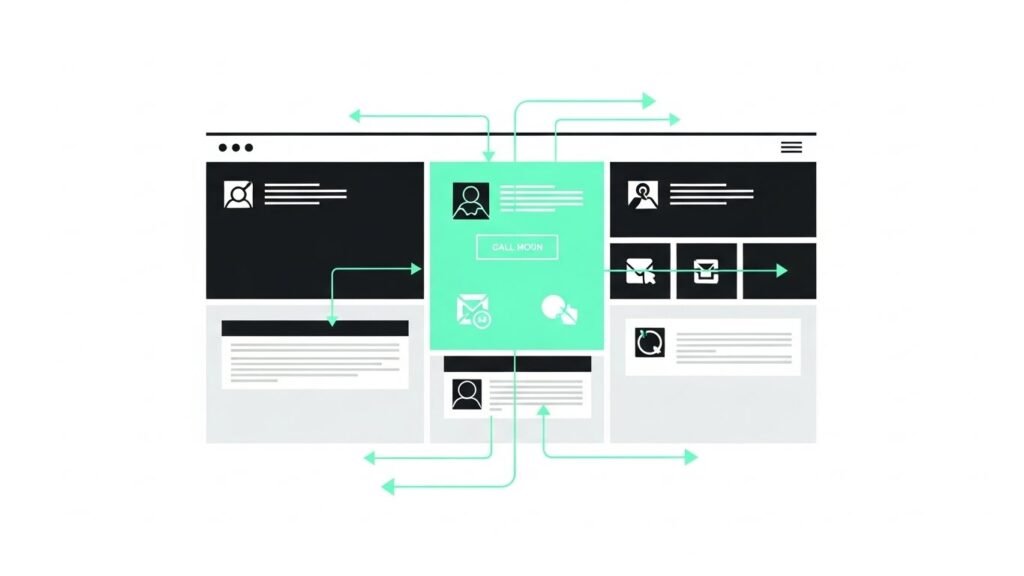
In an increasingly competitive online world, having an efficient and intuitive layout can make all the difference in the success of your website or application. After all, it’s the first impression the user will have of your brand, and if that experience isn’t positive, your chances of conversion and engagement can quickly diminish.
Fortunately, there are proven design principles that can help you create layouts that not only capture your audience’s attention but also facilitate navigation and boost your conversion rates. In this article, we’ll dive deep into these key elements and discover how to structure layouts that truly work.
Visual Hierarchy: The First Step to Understanding How to Structure Layouts
One of the most important foundations of an efficient layout is visual hierarchy. This means creating a clear structure that directs the user’s eye to the most important elements on your page. After all, if your target audience can’t quickly find the information they’re looking for or the actions they need to take, your chances of conversion will be significantly reduced.
To establish this hierarchy, you can use various visual resources, such as:
- Size: Main elements, like headings and calls to action, should stand out through their larger size relative to other elements.
- Color: Contrasting and strategic colors help highlight the key points of your interface.
- Spacing: Good use of margins, padding, and distances between elements creates a sense of organization and clarity.
- Positioning: Placing key elements in prominent areas, such as the center or top of the page, is also an effective technique.
By combining these strategies harmoniously, you’ll be able to guide the user’s eye smoothly, making it easier to understand and interact with your content. This is a fundamental step for anyone who wants to learn how to structure layouts effectively.
Balance and Symmetry: Creating Visual Harmony When Learning to Structure Layouts
Another fundamental aspect of an efficient layout is balance and symmetry. This means distributing elements in a balanced way, creating a sense of organization and visual harmony. Understanding balance is crucial for conveying professionalism. To know how to structure layouts professionally, balance is the key.
Symmetrical layouts, with aligned and symmetrically positioned elements, tend to be easier to process and convey an impression of stability. However, asymmetrical layouts can also work very well, as long as they maintain visual coherence and a sense of intentionality. The secret is knowing how to structure layouts so that asymmetry appears deliberate.
The important thing is finding the right balance, whether using symmetry or asymmetry, to avoid a feeling of disorder or visual chaos. This helps create a more pleasant and trustworthy experience for the user. Knowing how to structure layouts with visual harmony is a key differentiator.
Efficient Use of Space: Optimizing the Experience When Learning How to Structure Layouts
Beyond visual hierarchy and balance, strategic use of space is also essential for an efficient layout. After all, you need to make the most of every inch of the screen or page to facilitate navigation and content comprehension.
Some important techniques in this regard include:
- Alignment: Aligning elements consistently, whether left, right, or centered, creates a sense of organization.
- Grouping: Grouping related elements makes it easier for users to understand and interact.
- Sizing: Adjusting the size of elements according to their importance and function optimizes space usage.
By applying these principles, you’ll be able to create clean, objective layouts that allow intuitive navigation, significantly improving the user experience. This is how you learn to structure layouts that truly work.
Consistency and Patterns: The Foundation for Understanding How to Structure Intuitive Layouts
Another fundamental aspect of efficient layouts is consistency and the adoption of recognizable patterns. This means maintaining a coherent approach across all interface elements, from typography and colors to the arrangement of components.
When users encounter a familiar interface, they tend to feel more comfortable and confident in navigating. This is because recognizable patterns reduce cognitive load and allow people to focus on the tasks that truly matter. Consistency is vital for anyone seeking to understand how to structure layouts.
Additionally, consistency also contributes to building a strong and memorable visual identity, helping to consolidate your brand image. It’s an essential pillar for structuring layouts effectively.
Focus on User Goals: The Priority in How to Structure Layouts
Finally, an efficient layout should prioritize the user’s goals and needs. After all, a beautiful design is useless if it doesn’t facilitate the completion of your customers’ main tasks.
Therefore, it’s essential to deeply understand who your users are, what their challenges are, and how to create layouts that anticipate the target audience’s expectations and assist them effectively. The key is user-centered design. It’s fundamental to know how to structure layouts with your audience in mind.
This can involve everything from the strategic placement of key elements to the adoption of known interaction patterns and the implementation of features that facilitate the completion of main actions. Understanding how to structure layouts is a continuous improvement process.
Conclusion: Efficient Layouts, Memorable Experiences, and Lead Generation
Creating efficient layouts that improve user experience and boost your conversion rates is a constant challenge, but one well worth pursuing. After all, an intuitive, audience-centered design can make all the difference in the success of your online business.
By applying the principles of visual hierarchy, balance, efficient use of space, consistency, and focus on user goals, you’ll be taking a major step toward interfaces that not only attract attention but also facilitate navigation and drive conversion. This is the path to learning how to structure layouts professionally.
So don’t waste time! Start implementing these strategies in your projects and get ready to see positive results reflected in metrics like time on page, bounce rate, and number of qualified leads. Remember that knowing how to structure layouts is a valuable skill.
Learn now how to structure optimized layouts.
[CLICK HERE AND TAKE YOUR BUSINESS TO THE NEXT LEVEL]
To deepen your knowledge, also check out: